1944 NSU Kettenkrad HK 101 SdKfz 2, Germany. Heavy half-track tractor, one of the few units that could operate in conditions of spring and autumn slush #nsu #wehrmacht #kettenkrad #germanbikes #ww2 #worldwar2 #military #history #motorcycle #instabike #instamoto #motorrad #antique #classic #retro #mo … baca lanjutannya ►
1938 Zündapp K 800-W. The military version was especially favored by soldiers, but this model had the following drawback: spark plugs got often fouled due to the undercooling of rear cylinders. The Wehrmacht had in its inventory around 550 K 800 model units. It was and still is the only four-cylind … baca lanjutannya ►
1938 BMW R66, Gwrmany. Model R66 was ackonowledged to be one of the most advanced among the pre-WWII BMW models. Its twin-cylinder horizontally-opposed engine with the rating of 30 h.p. made it possible to achieve speeds of up to 145 km/h. #bmw #r66 #bmwr66 #600cc #bmwmotorcycle #bmwmotorrad #bmwmot … baca lanjutannya ►
1931 O.D. T100, Germany. Т100 was advertised as a bike for travellers and sportspeople. The engine was installed onto the strong pipe frame. A chain drive covered with an aliminium housing was coupled to the hand shifted three-speed gearbox Hurth (in their later years, the bike got a four-speed gea … baca lanjutannya ►
1939 BMW R12, Germany. By May 1941 around 36 thousand motorcycles were produced, and in the first year of production the output was 10 thousand units. Around 10 thousand more units were made specially for the Wehrmacht, but many civilian vehicles were also requisitioned for the front. #germanbike #w … baca lanjutannya ►
1930 Standard BT1000, Germany. The motorcycle was dressed up before intending purchasers as a luxurious touring bike that could be optionally equipped with a sidecar (in 1933, the bike got the name Imperator). This machine was a pricy one – the price was 1,580 Reichsmarks. For reference: a monthly … baca lanjutannya ►
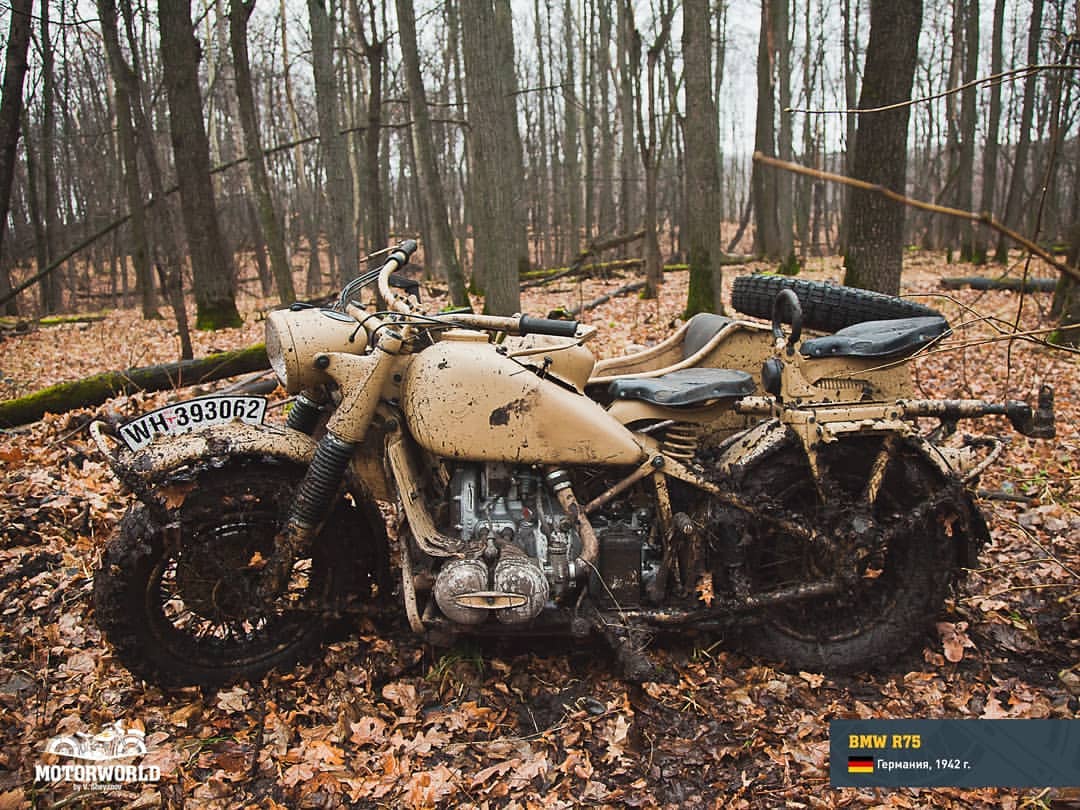
1942 BMW R75 after a hard ride. #bmwr75 #bmwrclassic #bmwsahara #ww2 #worldwar2 #germanmotorcycle #germanbike #wehrmacht #armymotorcycle #germanarmy #militarybike #history #germanbikes #instabike #instamoto #vintage #antique #retromotorcycle #motosofwar #classicmotorcycle #bmwmotorrad #bmwmoto #flat … baca lanjutannya ►
1941 Zündapp KS 600, Germany. Zündapp's evolution stage on the way to KS 750 creation. A new exhibit in the collection of Motorworld by V.Sheyanov. #zundapp #wehrmacht #ww2 #worldwar2 #germanmotorcycles #history #ww2history #instabike #vintage #vintagemotorcycle #classic #retro #ks600 #germanarmy … baca lanjutannya ►
1941 DKW NZ 500. The NZ 500 model was much less available as compared to NZ 250 and NZ 350. Most of the manufactured NZ 500 motorcycles were taken over by the Wehrmacht, and they were used, both with the sidecar and solo, in the cavalry units, by the military police and by the SS. #dkw #germany #ww2 … baca lanjutannya ►
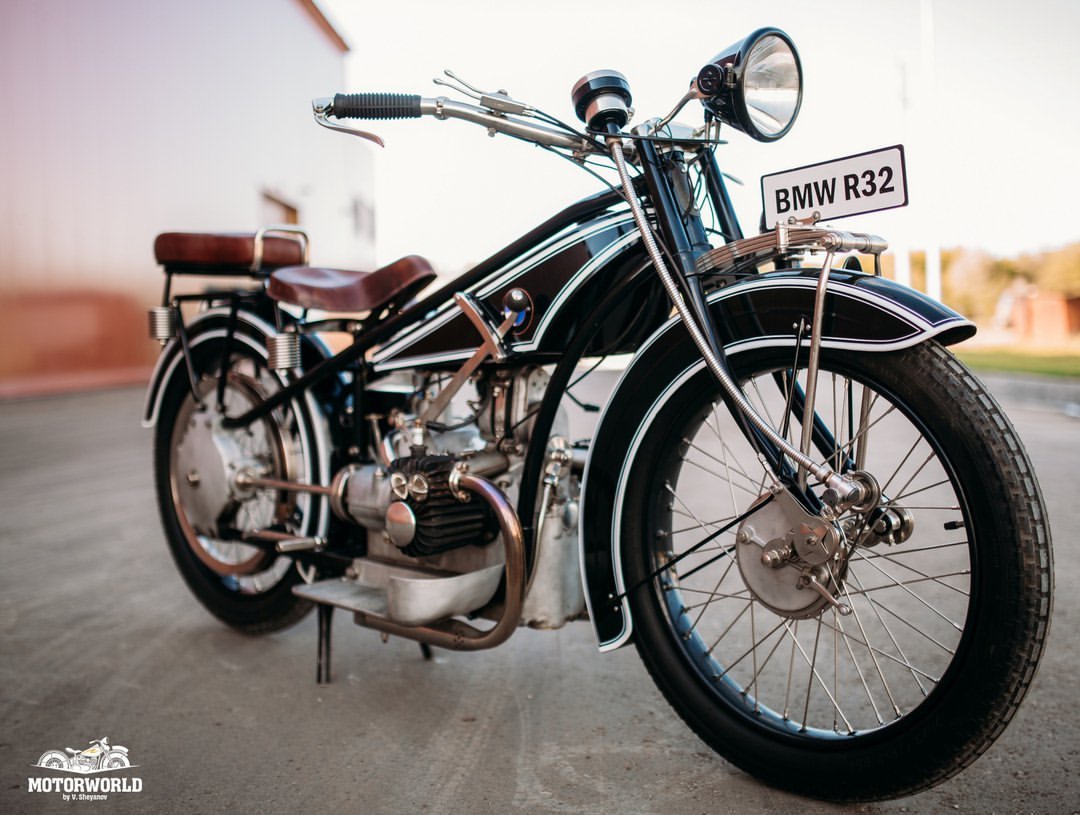
1926 BMW R32. First motorcycle produced by BMW under the BMW name. Max Fritz, chief engineer of BMW, was personally involved in developing the new motorcycle. He was giving it his full attention and all of his time: he even had a drafting board in his house. Within a month, practically from scratch … baca lanjutannya ►
1939 NSU 601 OSL, Germany. Model 601 OSL was adopted by the Wehrmacht. The military version of this model was featuring a second seat, large pouches, and an exhaust system painted black. In the army the motorcycle was used as a transportation means for couriers and orderlies, which was only to be ex … baca lanjutannya ►
1930 Tornax III-30, Germany. The first twin-cylinder Tornax motorcycle was model III/30 produced in 1930. It had an L-head, 996-cc, 26 h.p. engine. The manufacturer claimed that it could achieve a maximum speed of 130 km/h which made the motorcycle one of the fastest in the world. At special order t … baca lanjutannya ►
1936 BMW R5, Germany. In spring of 1936 BMW presented its totally new development – R5 motorcycle. Externally this 500-cc model looked like racing motorcycles in the early 1930s. Light-weight all-metal frame made of pressed steel was formed by oviform-section tubes, and, together with the revoluti … baca lanjutannya ►
1944 Zündapp KS750, Germany. At the end of the 1930s a motorcycle model KS 750 was developed by Zündapp Werke GmbH plant in Nuremberg and accepted by the Wehrmacht. It was designed for off-road rides over a very rough terrain and, as such, had higher off-road capacity and manoeuvrability; it was a … baca lanjutannya ►
1927 Windhoff 750, Germany. In 1927 there was a great sensation when a motorcycle was presented that made the Windhoff company famous and secured it a rightful place in the global motorcycle history. Hans Windhoff and Josef Dauben created a design at the time that still looks modern today. It was a … baca lanjutannya ►
1938 Zündapp K800, Germany. "Art deco on wheels" or of the most elegant motorcycles ever made. #zundapp #germany #germanbike #germanbikes #germanmade #4cylinder #motorcycle #2wheels #1930s #1938 #luxurious #800cc #classic #retromotorcycle #antique #vintage #retrobike #vintagemotorcycle #rarebikes # … baca lanjutannya ►
1928 Imperia Sport 500, Germany. In 1929 Imperia released one of its most successful models which won the affection of the fans of the motorized “steel horses” by reproducing the then popular sports style. High-quality structure, great riding stability, an engine with a “hot temper” and, las … baca lanjutannya ►
1939 BMW R61, Germany. First BMW model with telescopic rear suspension. #1939 #bmw #bmwmotorcycle #bmwmotorrad #history #motorcycle #bmwmoto #germanbikes #rarebikes #instabike #instamoto #bikelife #vintage #antique #telescopic #motorbike #bmwaddict #oppozit #lovebmw #vintagemotorcycle #classicmotorc … baca lanjutannya ►
1938 Zündapp K 800-W, Germany. In 1934 the civilian version of the K-800 was modified for the Wehrmacht. The military version, K 800-W, was especially favored by soldiers, but this model had the following drawback: spark plugs got often fouled due to the undercooling of rear cylinders. The Wehrmach … baca lanjutannya ►
1944 NSU Kettenkrad HK 101 SdKfz 2, Germany. The machine was equipped with a 4-cylinder, in-line automotive gasoline Opel Olimpia engine having a capacity of 36 h.p. at 3400 rpm. Its transmission included a dry single-plate clutch, a 3-speed gearbox, a demultiplicator and a double differential. The … baca lanjutannya ►
1938 BMW R66, Gwrmany. Model R66 was ackonowledged to be one of the most advanced among the pre-WWII BMW models. Its twin-cylinder horizontally-opposed engine with the rating of 30 h.p. made it possible to achieve speeds of up to 145 km/h. #bmw #r66 #bmwr66 #600cc #bmwmotorcycle #bmwmotorrad #bmwmot … baca lanjutannya ►
1931 O.D. T100, Germany. Т100 was advertised as a bike for travellers and sportspeople. The engine was installed onto the strong pipe frame. A chain drive covered with an aliminium housing was coupled to the hand shifted three-speed gearbox Hurth (in their later years, the bike got a four-speed gea … baca lanjutannya ►
1939 BMW R12, Germany. By May 1941 around 36 thousand motorcycles were produced, and in the first year of production the output was 10 thousand units. Around 10 thousand more units were made specially for the Wehrmacht, but many civilian vehicles were also requisitioned for the front. #germanbike #w … baca lanjutannya ►
1941 Zündapp KS 600, Germany. It was a preface for creating a special military motorcycle KS750 manufacturing of which had started in 1941. But manufacturing of KS600 machines didn’t stop – they were used as mobile generating sets. #zundapp #wehrmacht #ww2 #worldwar2 #germanmotorcycles #history … baca lanjutannya ►
1941 DKW NZ 500. The NZ 500 model was much less available as compared to NZ 250 and NZ 350. Most of the manufactured NZ 500 motorcycles were taken over by the Wehrmacht, and they were used, both with the sidecar and solo, in the cavalry units, by the military police and by the SS. #dkw #ss #ww2 #wor … baca lanjutannya ►
 Ξ
Ξ