1944 NSU Kettenkrad HK 101 SdKfz 2, Germany. Heavy half-track tractor, one of the few units that could operate in conditions of spring and autumn slush #nsu #wehrmacht #kettenkrad #germanbikes #ww2 #worldwar2 #military #history #motorcycle #instabike #instamoto #motorrad #antique #classic #retro #mo … baca lanjutannya ►
1938 Zündapp K 800-W. The military version was especially favored by soldiers, but this model had the following drawback: spark plugs got often fouled due to the undercooling of rear cylinders. The Wehrmacht had in its inventory around 550 K 800 model units. It was and still is the only four-cylind … baca lanjutannya ►
1939 BMW R12, Germany. By May 1941 around 36 thousand motorcycles were produced, and in the first year of production the output was 10 thousand units. Around 10 thousand more units were made specially for the Wehrmacht, but many civilian vehicles were also requisitioned for the front. #germanbike #w … baca lanjutannya ►
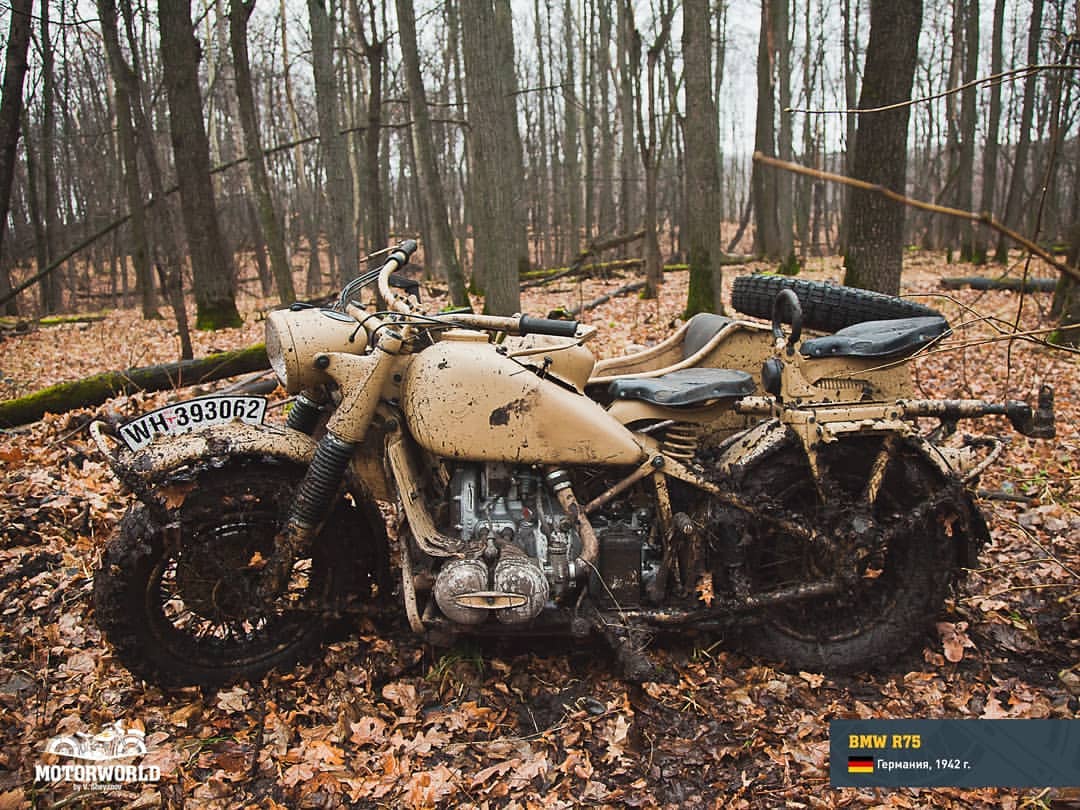
1942 BMW R75 after a hard ride. #bmwr75 #bmwrclassic #bmwsahara #ww2 #worldwar2 #germanmotorcycle #germanbike #wehrmacht #armymotorcycle #germanarmy #militarybike #history #germanbikes #instabike #instamoto #vintage #antique #retromotorcycle #motosofwar #classicmotorcycle #bmwmotorrad #bmwmoto #flat … baca lanjutannya ►
1941 Zündapp KS 600, Germany. Zündapp's evolution stage on the way to KS 750 creation. A new exhibit in the collection of Motorworld by V.Sheyanov. #zundapp #wehrmacht #ww2 #worldwar2 #germanmotorcycles #history #ww2history #instabike #vintage #vintagemotorcycle #classic #retro #ks600 #germanarmy … baca lanjutannya ►
1941 DKW NZ 500. The NZ 500 model was much less available as compared to NZ 250 and NZ 350. Most of the manufactured NZ 500 motorcycles were taken over by the Wehrmacht, and they were used, both with the sidecar and solo, in the cavalry units, by the military police and by the SS. #dkw #germany #ww2 … baca lanjutannya ►
1939 NSU 601 OSL, Germany. Model 601 OSL was adopted by the Wehrmacht. The military version of this model was featuring a second seat, large pouches, and an exhaust system painted black. In the army the motorcycle was used as a transportation means for couriers and orderlies, which was only to be ex … baca lanjutannya ►
1944 Zündapp KS750, Germany. At the end of the 1930s a motorcycle model KS 750 was developed by Zündapp Werke GmbH plant in Nuremberg and accepted by the Wehrmacht. It was designed for off-road rides over a very rough terrain and, as such, had higher off-road capacity and manoeuvrability; it was a … baca lanjutannya ►
1938 Zündapp K 800-W, Germany. In 1934 the civilian version of the K-800 was modified for the Wehrmacht. The military version, K 800-W, was especially favored by soldiers, but this model had the following drawback: spark plugs got often fouled due to the undercooling of rear cylinders. The Wehrmach … baca lanjutannya ►
1944 NSU Kettenkrad HK 101 SdKfz 2, Germany. The machine was equipped with a 4-cylinder, in-line automotive gasoline Opel Olimpia engine having a capacity of 36 h.p. at 3400 rpm. Its transmission included a dry single-plate clutch, a 3-speed gearbox, a demultiplicator and a double differential. The … baca lanjutannya ►
1939 BMW R12, Germany. By May 1941 around 36 thousand motorcycles were produced, and in the first year of production the output was 10 thousand units. Around 10 thousand more units were made specially for the Wehrmacht, but many civilian vehicles were also requisitioned for the front. #germanbike #w … baca lanjutannya ►
1941 Zündapp KS 600, Germany. It was a preface for creating a special military motorcycle KS750 manufacturing of which had started in 1941. But manufacturing of KS600 machines didn’t stop – they were used as mobile generating sets. #zundapp #wehrmacht #ww2 #worldwar2 #germanmotorcycles #history … baca lanjutannya ►
1941 DKW NZ 500. The NZ 500 model was much less available as compared to NZ 250 and NZ 350. Most of the manufactured NZ 500 motorcycles were taken over by the Wehrmacht, and they were used, both with the sidecar and solo, in the cavalry units, by the military police and by the SS. #dkw #ss #ww2 #wor … baca lanjutannya ►
1939 NSU 601 OSL, Germany. Model 601 OSL was adopted by the Wehrmacht. The military version of this model was featuring a second seat, large pouches, and an exhaust system painted black. In the army the motorcycle was used as a transportation means for couriers and orderlies, which was only to be ex … baca lanjutannya ►
1944 Zündapp KS750 and infantry trailer IF8, Germany. With the sidecar, this motorcycle had a mass of 420 kg, but it was, nevertheless, simple to control and reliable to operate. The sidecar featured torsion-bar suspension, having a wheel drive and brake from the rear axle of the motorcycle. Ammuni … baca lanjutannya ►
1939 BMW R12, Germany. By May 1941 around 36 thousand motorcycles were produced, and in the first year of production the output was 10 thousand units. Around 10 thousand more units were made specially for the Wehrmacht, but many civilian vehicles were also requisitioned for the front. #germanbike #w … baca lanjutannya ►
1941 Zündapp KS 600, Germany 🇩🇪. It was a preface for creating a special military motorcycle KS750 manufacturing of which had started in 1941. But manufacturing of KS600 machines didn’t stop – they were used as mobile generating sets. #zundapp #wehrmacht #ww2 #worldwar2 #germanmotorcycles … baca lanjutannya ►
1941 DKW NZ 500, Germany 🇩🇪. The NZ 500 model was much less available as compared to NZ 250 and NZ 350. Most of the manufactured NZ 500 motorcycles were taken over by the Wehrmacht, and they were used, both with the sidecar and solo, in the cavalry units, by the military police and by the SS. … baca lanjutannya ►
1939 NSU 601 OSL, Germany 🇩🇪. Model 601 OSL was adopted by the Wehrmacht. The military version of this model was featuring a second seat, large pouches, and an exhaust system painted black. In the army the motorcycle was used as a transportation means for couriers and orderlies, which was on … baca lanjutannya ►
 Ξ
Ξ